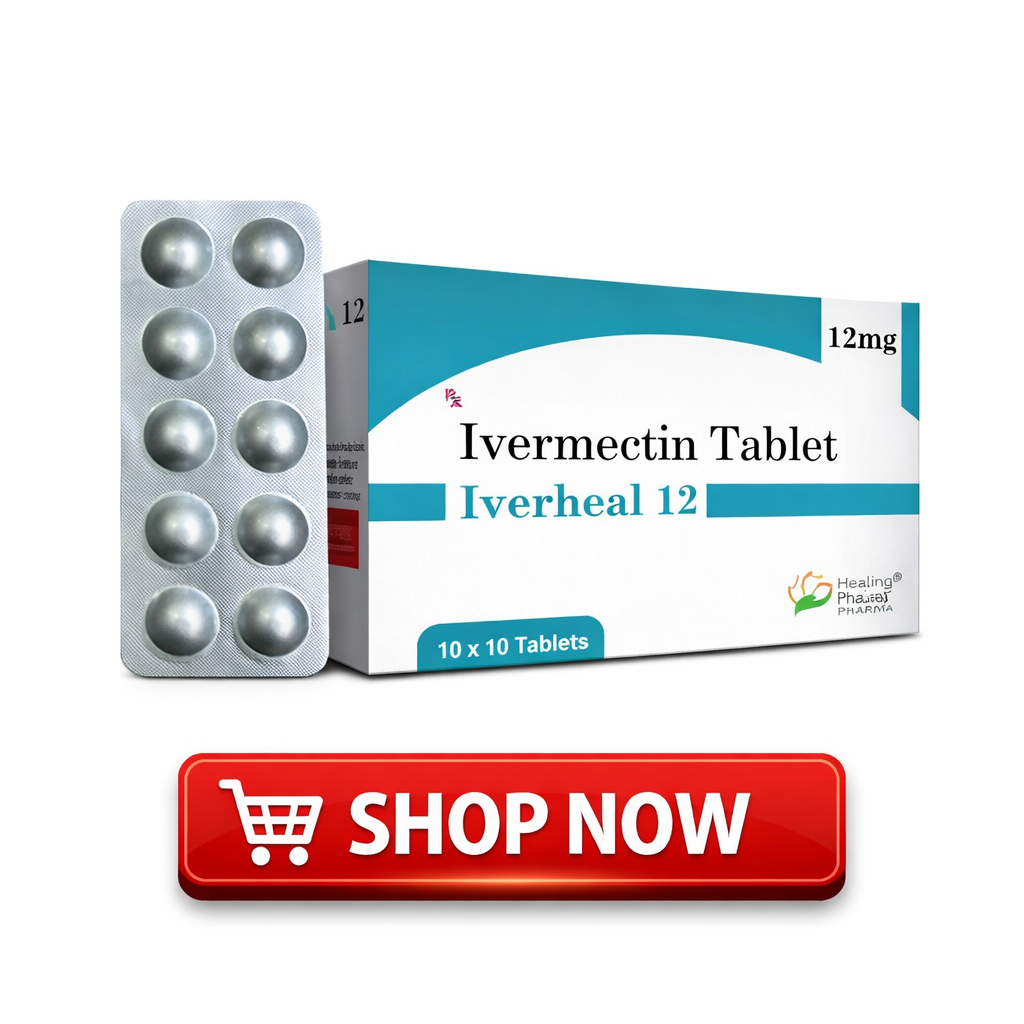
Iverheal 12: What It Is, What It Treats & How to Use It Safely
If you’ve been prescribed Iverheal 12 — or you’ve seen it mentioned online — you’re probably wondering what it actually does, whether it’s safe, and if it’s the right treatment for you.
This guide breaks down everything you need to know about Iverheal 12 (ivermectin 12mg) in plain, simple language. No medical jargon. No confusion. Just the facts.
What Is Iverheal 12?
Iverheal 12 is a 12mg tablet of ivermectin, a medication that belongs to a group of drugs called antiparasitics. It was originally discovered in a soil sample from Japan in the 1970s, and its developers won the Nobel Prize in Medicine in 2015 for transforming the treatment of parasitic diseases worldwide.
Today, ivermectin is used by over 250 million people every year, mostly in tropical regions where parasitic infections are common. It’s considered one of the safest and most effective antiparasitic drugs ever made — when used correctly for the right condition.
What Is Iverheal 12 Used For?
Iverheal 12 is prescribed to treat parasitic infections in humans. Here are the main conditions it’s used for:
1. Strongyloidiasis (Intestinal Roundworm)
This is an infection caused by a tiny worm called Strongyloides stercoralis that lives in your intestines. It’s common in tropical and subtropical areas and can persist for decades if untreated because the worm can reinfect the same person over and over.
Why it matters: In people with weakened immune systems (like those on steroids, after organ transplants, or with certain cancers), this infection can spiral into a life-threatening condition called hyperinfection syndrome.
- Standard dose: 200 micrograms per kg of body weight, usually for 1–2 days
- For severe cases: Daily dosing until stool tests come back clear for at least 2 weeks
2. Onchocerciasis (River Blindness)
This is a devastating eye and skin disease caused by a filarial worm transmitted through blackfly bites. It affects millions of people in Africa and parts of Latin America.
Ivermectin doesn’t kill the adult worms, but it:
- Wipes out the baby worms (microfilariae) circulating in the skin and eyes
- Temporarily sterilizes the adult female worms so they can’t produce more larvae for months
- Standard dose: 150 micrograms per kg, taken as a single dose
- Frequency: Every 6–12 months for 10–15 years (the lifespan of the adult worms)
3. Scabies
Scabies is an intensely itchy skin condition caused by tiny mites that burrow under your skin. It’s extremely contagious and spreads quickly through households, schools, and nursing homes.
Iverheal 12 for scabies:
- Dose: 200 micrograms per kg
- Schedule: Two doses, 7–14 days apart
- Why two doses? The first dose kills adult mites, but eggs may hatch later. The second dose catches the newly hatched mites before they can reproduce.
For severe “crusted” scabies (common in elderly or immunocompromised patients), doctors may prescribe 5 or more doses along with medicated skin creams.
4. Head Lice
While the FDA has approved a topical ivermectin lotion (0.5%) specifically for head lice, oral ivermectin is also used off-label in some cases — especially when topical treatments fail.
- Oral dose: 200–400 micrograms per kg, repeated in 9–10 days
- Topical lotion: Single application to dry hair, no nit combing required
5. Rosacea
This might surprise you, but ivermectin isn’t just for parasites. A 1% ivermectin cream (Soolantra) is FDA-approved for treating the red, bumpy skin of rosacea. It works by reducing inflammation and killing Demodex mites, which are more common on the skin of people with rosacea.
How Does Ivermectin Actually Work?
Here’s the fascinating part: ivermectin is selectively toxic to parasites but safe for humans. Here’s why:
It Paralyzes Parasites
Ivermectin binds to special channels in the nerve and muscle cells of parasites called glutamate-gated chloride channels (GluCls). These channels don’t exist in humans. When ivermectin opens these channels, chloride floods into the parasite’s cells, causing paralysis — the parasite can’t move, eat, or reproduce, and eventually dies.
Your Brain Is Protected
Even though ivermectin can affect similar channels in mammals, your body has a built-in defense: a protein called P-glycoprotein that acts like a bouncer at the blood-brain barrier. It pumps ivermectin out of your brain before it can cause any harm. This is why ivermectin is so safe for humans at normal doses.
Important exception: Some animals (like collie dogs) lack this protection and can suffer severe or fatal neurotoxicity from ivermectin. Never give human ivermectin to pets, and never take veterinary ivermectin yourself.
Iverheal 12 Dosage Guide
All ivermectin dosing is based on body weight. Here’s a quick reference:
Table
| Condition | Dose | How Often |
|---|---|---|
| Strongyloidiasis | 200 mcg/kg | 1–2 days |
| Onchocerciasis | 150 mcg/kg | Every 6–12 months |
| Scabies (classic) | 200 mcg/kg | 2 doses, 7–14 days apart |
| Scabies (crusted) | 200 mcg/kg | Multiple doses over 2–4 weeks |
| Head lice (oral) | 200–400 mcg/kg | 2 doses, 9–10 days apart |
Practical Example
If you weigh 70 kg (154 lbs):
- For onchocerciasis: 70 × 150 = 10,500 mcg = ~10.5 mg (about one 12mg tablet)
- For strongyloidiasis or scabies: 70 × 200 = 14,000 mcg = 14 mg (may need one 12mg + one 3mg tablet, or rounding per your doctor’s judgment)
How to Take It
- On an empty stomach with a full glass of water
- Take it at least 1 hour before or 2 hours after eating
- Swallow the tablet whole — don’t crush or chew it
- Exception for scabies: Some doctors recommend taking it with food to increase absorption
Side Effects: What to Expect
Ivermectin is remarkably well-tolerated. Most people experience no side effects at all. When they do occur, they’re usually mild and go away on their own within a day or two.
Common Side Effects
- Dizziness or lightheadedness
- Nausea or vomiting
- Diarrhea
- Tiredness
- Headache
- Stomach pain
- Itching or rash (especially if treating onchocerciasis or scabies)
The “Mazzotti Reaction”
If you’re being treated for river blindness, you might experience temporary worsening of itching, rash, fever, or swollen lymph nodes within the first few days. This happens because your immune system is reacting to the sudden death of millions of tiny worms. It’s uncomfortable but usually not dangerous, and it means the medicine is working.
When to Call a Doctor Immediately
Seek emergency care if you experience:
- Difficulty breathing or swallowing
- Swelling of your face, lips, or throat
- Severe skin rash or blistering
- Confusion, seizures, or fainting
- Severe eye pain or vision changes
- Fast heartbeat or chest pain
Who Should NOT Take Iverheal 12?
Absolute No-Go
- Anyone allergic to ivermectin
- People with Loa loa infection (African eye worm): Ivermectin can cause fatal brain inflammation if you have a heavy load of this particular parasite. Screening is essential in Central and West Africa.
Use With Caution
- Children under 15 kg (33 lbs): Limited safety data, though recent studies suggest it’s safer than previously thought
- Pregnant women: Generally prefer topical permethrin for scabies; use oral ivermectin only if benefits clearly outweigh risks
- Breastfeeding women: Less than 2% passes into breast milk; generally considered low risk
- People with liver disease: The drug is processed by the liver, so impaired function may require dose adjustments
- Immunocompromised patients: May need longer or repeated treatment courses
Drug Interactions to Know About
Before taking Iverheal 12, tell your doctor about all medications and supplements you’re using. Key interactions include:
Table
| Drug/Substance | What Happens |
|---|---|
| Warfarin (blood thinner) | Increased bleeding risk |
| Alcohol | Can worsen dizziness and nausea |
| CYP3A4 inducers (rifampin, carbamazepine, St. John’s wort) | May reduce ivermectin’s effectiveness |
| CYP3A4 inhibitors (ketoconazole, erythromycin, grapefruit juice) | May increase ivermectin levels |
| Sedatives | Additive drowsiness |
The COVID-19 Controversy: Let’s Set the Record Straight
During the pandemic, ivermectin became one of the most debated drugs on the internet. Here’s what you need to know:
What the Science Actually Shows
- Laboratory studies showed ivermectin could inhibit SARS-CoV-2 in petri dishes — but only at concentrations 100 times higher than what’s safe to give humans
- Large clinical trials (I-TECH, PRINCIPLE, TOGETHER) found no benefit for COVID-19 patients
- The FDA, CDC, WHO, and NIH all advise against using ivermectin for COVID-19 outside of clinical trials
The Danger of Misuse
The controversy led some people to:
- Buy veterinary ivermectin (horse paste, cattle pour-on) — which is highly concentrated and can cause seizures, coma, and death
- Self-medicate without medical supervision
- Delay proven treatments like vaccines, antivirals, and monoclonal antibodies
Bottom line: Ivermectin is a life-saving antiparasitic drug. It is not an effective treatment for COVID-19.
Veterinary vs. Human Ivermectin: Know the Difference
This cannot be stressed enough: veterinary and human ivermectin are not the same thing.
Table
| Feature | Human Ivermectin | Veterinary Ivermectin |
|---|---|---|
| Concentration | 3mg or 12mg tablets | Often 1% solutions (10mg per mL) |
| Excipients | Pharmaceutical-grade, human-safe | May contain toxic solvents |
| Purity | Strict human-grade standards | Different specifications |
| Dosing | Weight-based, doctor-prescribed | Designed for animals |
| Safety testing | Tested in humans | Tested in animals |
Never use animal products on yourself. The FDA has issued explicit warnings, and people have been hospitalized and died from veterinary ivermectin overdose.
Global Impact: How Ivermectin Changed the World
Ivermectin isn’t just another pill — it’s a global health success story:
- 1987: Merck committed to donating ivermectin (as Mectizan) for river blindness “for as long as needed” — the longest-running drug donation program in history
- 4+ billion treatments have been distributed across 30+ countries
- 600,000+ cases of blindness prevented in West Africa alone
- Colombia, Ecuador, Guatemala, and Mexico have eliminated onchocerciasis entirely
- The WHO now recommends mass drug administration for scabies in high-prevalence communities
In 2024, the WHO released its first-ever guideline for controlling strongyloidiasis through annual ivermectin treatment in endemic areas.
Frequently Asked Questions
Is Iverheal 12 the same as Stromectol?
Yes — both contain the same active ingredient (ivermectin). Iverheal 12 is a generic brand; Stromectol is the original brand name. The active ingredient, mechanism, and effectiveness are identical.
How fast does it work?
- Strongyloidiasis: Symptoms improve within 2–3 days
- Scabies: Itching may persist for 2–4 weeks even after the mites are dead (your skin is healing)
- Onchocerciasis: Microfilariae drop dramatically within days; skin and eye symptoms improve over months
Can I drink alcohol while taking it?
It’s best to avoid alcohol during treatment. It can worsen side effects like dizziness and may interfere with how your body processes the drug.
What if I miss a dose?
For single-dose treatments, take it as soon as you remember. For multi-dose regimens (like scabies), take the missed dose as soon as possible and contact your doctor about timing the next dose.
Can I take it for worms if I’m not sure what kind I have?
No. Different worms need different treatments. Ivermectin works well for roundworms and certain filarial worms but is not effective against tapeworms or flukes. Get properly diagnosed first.
Is it safe for long-term use?
For onchocerciasis, people take it every 6–12 months for 10–15 years with an excellent safety record. For other conditions, it’s usually just 1–2 doses.