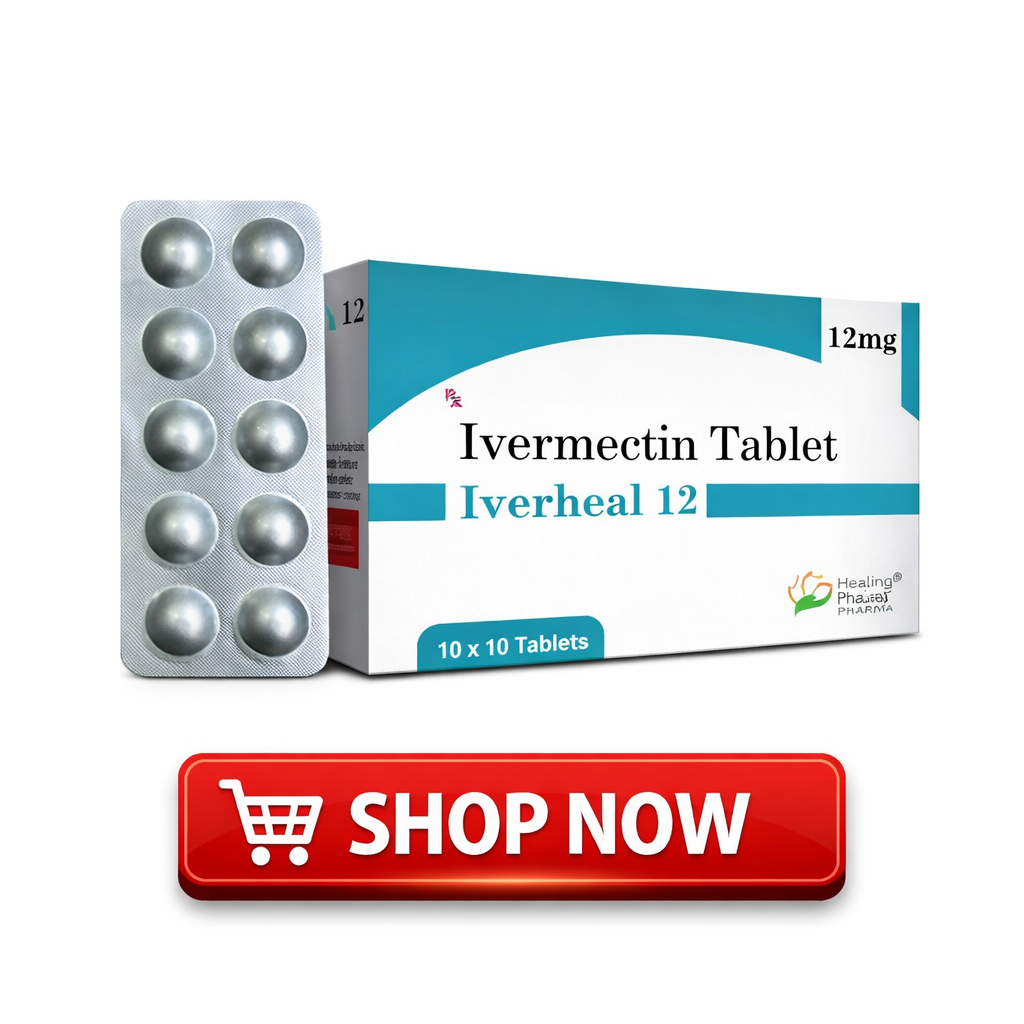
The Complete Iverheal 12 Guide: Uses, Dosage, Side Effects, Safety & Everything You Need to Know
Discover the ultimate guide to Iverheal 12 (Ivermectin 12mg). Learn about approved uses, proper dosage, side effects, safety warnings, manufacturer details, and regulatory status. Evidence-based information for informed healthcare decisions.
What is Iverheal 12?
Iverheal 12 is a pharmaceutical product containing 12mg of Ivermectin, a broad-spectrum antiparasitic medication belonging to the avermectin class of drugs. Ivermectin was originally discovered in the late 1970s by Japanese microbiologist Satoshi Ōmura and Irish parasitologist William C. Campbell, who were awarded the 2015 Nobel Prize in Physiology or Medicine for their groundbreaking work on this compound.
Iverheal 12 is manufactured by Healing Pharma, a Mumbai, India-based generic pharmaceutical company. The medication is primarily indicated for the treatment of various parasitic infections in humans, including intestinal strongyloidiasis and onchocerciasis (river blindness). It works by paralyzing and killing parasites or inhibiting their ability to reproduce, thereby clearing the infection from the body.
The active ingredient, Ivermectin, is available in multiple formulations worldwide, including brand-name versions like Stromectol (in the United States) and various generic alternatives. Iverheal 12 represents one of the higher-strength formulations available, with each tablet containing 12mg of the active compound.
Understanding Iverheal 12 requires distinguishing between its legitimate antiparasitic applications and unapproved uses that have been widely discussed in public discourse. This guide focuses exclusively on evidence-based, medically approved information to help patients and healthcare providers make informed decisions.
Manufacturer & Composition
Manufacturer Profile: Healing Pharma
Iverheal 12 is produced by Healing Pharma India Pvt. Ltd., a pharmaceutical company headquartered in Mumbai, Maharashtra, India. The company specializes in manufacturing generic medications across various therapeutic categories, including antiparasitics, antibiotics, cardiovascular drugs, and dermatological products.
Healing Pharma markets Iverheal 12 as a generic alternative to brand-name ivermectin products, typically packaging the medication in boxes containing 10 tablets per blister pack. The company distributes its products primarily in Indian domestic markets and through international export channels to various countries where ivermectin is approved for human use.
Product Composition
Each Iverheal 12 tablet contains:
- Active Ingredient: Ivermectin USP 12mg
- Inactive Ingredients: Typically include microcrystalline cellulose, pregelatinized starch, magnesium stearate, and other standard pharmaceutical excipients (specific inactive ingredients may vary by batch and manufacturing specifications)
The tablets are usually white, round, flat-faced bevel-edge bisect uncoated tablets, with an average weight of approximately 110mg per tablet according to laboratory analyses conducted by regulatory authorities.
Quality Concerns & Regulatory Testing
In September 2024, the Australian Therapeutic Goods Administration (TGA) conducted laboratory testing on samples of Iverheal 12 obtained from Australian Border Force. The analysis revealed significant quality concerns:
“Ivermectin was identified in the sample. The average content in the sample was 80.1% of the labelled content, with the variation between the 10 tablets ranging from 43.8% to 89.4%. This sample would not meet the requirements of the USP as the content is below 90.0% of the labelled amount.”
This finding indicates substantial variability in tablet potency, with some tablets containing less than half the stated amount of active ingredient. Such quality inconsistencies raise serious concerns about therapeutic efficacy and highlight the importance of sourcing medications from regulated, verified suppliers.
FDA & Regulatory Status
United States FDA Position
The U.S. Food and Drug Administration (FDA) has taken a firm stance regarding Iverheal 12 specifically and ivermectin products marketed for unapproved uses generally.
In March 2023, the FDA issued a Warning Letter to the website ivermectin4covid.com, which was marketing Iverheal 12mg manufactured by Healing Pharma. The FDA stated:
“While there are FDA-approved versions of ivermectin on the market in the U.S., there are no approved drug applications pursuant to section 505 of the FD&C Act in effect for the ‘Iverheal 12mg’ manufactured by Healing Pharma.”
The FDA further emphasized that ivermectin has not been approved for use in the prevention, diagnosis, treatment, mitigation, or cure of COVID-19. This warning letter highlighted that Iverheal 12 was being sold as an unapproved and misbranded drug when marketed for COVID-19 treatment.
Key Regulatory Points:
- No FDA Approval for Iverheal 12: The specific Iverheal 12mg product by Healing Pharma does not have an approved New Drug Application (NDA) or Abbreviated New Drug Application (ANDA) with the FDA.
- Approved Ivermectin Products Exist: FDA-approved ivermectin tablets (such as Stromectol) are available in the U.S. by prescription only for specific parasitic infections.
- COVID-19 Not an Approved Indication: Multiple major health organizations, including the FDA, CDC, and WHO, do not recommend ivermectin for COVID-19 treatment outside of clinical trials.
- International Regulatory Actions: The Australian TGA’s testing revealed quality deficiencies in Iverheal 12 samples , while the Philippines FDA has issued public health warnings against unregistered ivermectin products.
WHO & CDC Position
The World Health Organization (WHO) does not recommend ivermectin tablets for COVID-19 except within the context of clinical trials. The Centers for Disease Control and Prevention (CDC) does not list ivermectin tablets among recommended COVID-19 treatments.
Clinical trials, including the prominent TOGETHER trial (NCT04727424), demonstrated that ivermectin tablets did not reduce hospital admissions due to COVID-19 progression or prolong emergency department observation among high-risk outpatients.
Approved Medical Uses
Ivermectin, the active ingredient in Iverheal 12, has well-established FDA-approved indications for specific parasitic infections. These represent the legitimate, evidence-based uses of the medication.
1. Intestinal Strongyloidiasis
Strongyloidiasis is an infection caused by the nematode parasite Strongyloides stercoralis. This intestinal infection is particularly concerning because the parasite can complete its entire life cycle within the human host, potentially leading to chronic infection lasting decades.
Clinical Presentation:
- Abdominal pain and bloating
- Diarrhea or alternating diarrhea and constipation
- Nausea and vomiting
- Weight loss
- Cutaneous larva migrans (itchy skin tracks)
- In immunocompromised patients, potentially life-threatening hyperinfection syndrome
Ivermectin Treatment: Ivermectin is considered the drug of choice for strongyloidiasis. The typical dosage is 200 mcg/kg (0.2 mg/kg) of body weight as a single oral dose. For patients with compromised immune systems (such as those with HIV/AIDS), multiple doses may be required because a single dose may be insufficient to clear the infection.
Follow-up stool examinations are essential to confirm eradication, particularly in immunocompromised individuals who may require retreatment.
2. Onchocerciasis (River Blindness)
Onchocerciasis, commonly known as river blindness, is caused by the filarial worm Onchocerca volvulus and is transmitted through the bites of infected blackflies (Simulium species). It is a leading cause of infectious blindness worldwide, primarily affecting communities near fast-flowing rivers and streams in sub-Saharan Africa, with smaller foci in Latin America and Yemen.
Clinical Presentation:
- Severe itching and skin nodules
- Skin depigmentation and atrophy
- Visual impairment and blindness
- Lymphadenopathy
Ivermectin Treatment: The standard dosage is 150 mcg/kg (0.15 mg/kg) as a single oral dose. Ivermectin does not kill adult O. volvulus worms but suppresses the release of microfilariae (immature worms) from adult females, reducing transmission and disease progression.
Treatment is typically repeated every 6-12 months to maintain suppression of microfilarial production. In some cases, surgical removal of nodules containing adult worms may be necessary.
3. Other Parasitic Infections (Off-Label/Investigational)
While not FDA-approved for all conditions, ivermectin has demonstrated efficacy against various other parasitic infections and is used off-label in many regions:
Scabies: Ivermectin is highly effective against Sarcoptes scabiei, the mite responsible for scabies. The typical regimen is 200 mcg/kg as a single dose, repeated in 7-14 days because ivermectin lacks ovicidal activity (it does not kill eggs). This off-label use is supported by extensive clinical evidence and is recommended by many dermatology guidelines.
Head Lice (Pediculosis): Oral ivermectin at 200-400 mcg/kg has shown efficacy against head lice infestations, particularly in cases resistant to topical treatments.
Lymphatic Filariasis: Ivermectin is used in mass drug administration programs, often in combination with albendazole, to reduce microfilarial loads in lymphatic filariasis caused by Wuchereria bancrofti.
Other Helminth Infections: Ivermectin has activity against various other nematode infections, including ascariasis, trichuriasis, and enterobiasis, though it is not always the first-line treatment.
How Iverheal 12 Works
Pharmacological Mechanism
Ivermectin exerts its antiparasitic effects through a highly specific mechanism involving glutamate-gated chloride channels (GluCls), which are present in the nerve and muscle cells of invertebrates but absent in mammals.
Step-by-Step Mechanism:
- Selective Binding: Ivermectin binds with high affinity to glutamate-gated chloride channels in the nervous system and musculature of parasites .
- Channel Activation: This binding increases the permeability of the cell membrane to chloride ions, leading to hyperpolarization of the nerve or muscle cell.
- Paralysis and Death: The hyperpolarization results in flaccid paralysis of the parasite’s musculature, effectively immobilizing and eventually killing the organism .
- Reproductive Inhibition: In filarial worms like Onchocerca volvulus, ivermectin primarily blocks the release of microfilariae from adult female worms rather than killing the adults directly .
Pharmacokinetics
Absorption: Ivermectin tablets are rapidly absorbed following oral administration, reaching maximum plasma concentrations approximately 4 hours after a 12mg dose. Bioavailability is enhanced when taken on an empty stomach.
Distribution: The drug exhibits broad tissue distribution, with higher concentrations found in adipose tissue, liver, and intestinal walls. It crosses the blood-brain barrier poorly, which contributes to its relative safety in mammals.
Metabolism: Ivermectin is extensively metabolized in the liver, primarily by CYP3A4 enzymes.
Elimination: The elimination half-life is approximately 18 hours, with the drug and its metabolites excreted primarily in feces. Minimal amounts are excreted in human breast milk.
Why It Doesn’t Harm Human Cells
The selectivity of ivermectin for parasites versus humans stems from fundamental differences in cellular biology:
- Humans lack glutamate-gated chloride channels in our nervous systems
- Ivermectin does not effectively cross the blood-brain barrier in most individuals
- Mammalian GABA-gated chloride channels have much lower affinity for ivermectin compared to invertebrate GluCls
This selectivity profile explains why ivermectin is relatively safe for human use at therapeutic doses while being highly toxic to parasitic organisms.
Proper Dosage Guidelines
Correct dosing of ivermectin is critical for efficacy and safety. Dosage is universally calculated based on body weight rather than using fixed tablet strengths.
Standard Weight-Based Dosing
For Strongyloidiasis:
- 200 mcg/kg (0.2 mg/kg) as a single oral dose
- Example: A 60kg patient would require 12mg (one Iverheal 12 tablet)
- Example: A 75kg patient would require 15mg (requiring combination of tablet strengths)
For Onchocerciasis:
- 150 mcg/kg (0.15 mg/kg) as a single oral dose
- Example: A 60kg patient would require 9mg
- Example: An 80kg patient would require 12mg (one Iverheal 12 tablet)
For Scabies (Off-Label):
- 200 mcg/kg as a single dose, repeated in 7-14 days
- The repeat dose is essential because ivermectin does not kill scabies eggs
Pediatric Dosing
For children weighing 15 kg (33 pounds) or more, the same weight-based calculations apply
However:
- Safety and efficacy have not been established for children weighing less than 15 kg
- Pediatric use should only occur under direct medical supervision
- Some clinical studies have documented use in younger children without major side effects, but this remains off-label
Geriatric Considerations
Older adults (65+ years) may process ivermectin more slowly due to age-related decreases in liver function
This can result in:
- Higher drug levels in the body for longer periods
- Increased risk of side effects
- Need for closer monitoring
Immunocompromised Patients
Patients with HIV/AIDS or other immunodeficiency conditions may require:
- Multiple doses of ivermectin rather than a single dose
- More frequent follow-up stool examinations
- Extended treatment courses to achieve parasitic eradication
How to Take Iverheal 12
Administration Instructions
Timing: Ivermectin should be taken on an empty stomach for optimal absorption:
- At least 1 hour before a meal, OR
- At least 2 hours after a meal
Method:
- Swallow the tablet whole with a full glass of water
- Do not crush, chew, or break the tablet
- Take exactly as prescribed by your healthcare provider
Frequency: Most ivermectin regimens involve a single dose. However, your doctor may prescribe:
- Multiple doses spaced months apart for onchocerciasis
- A second dose 7-14 days later for scabies
- Extended courses for immunocompromised patients
Missed Dose Protocol
If you are on a scheduled treatment plan and miss a dose:
- Take the missed dose as soon as you remember
- If it is almost time for your next scheduled dose, skip the missed dose
- Never take extra medicine to make up for a missed dose
Overdose Management
Symptoms of ivermectin overdose may include:
- Skin rash or severe itching
- Swelling (especially of face, lips, tongue)
- Headache and dizziness
- Nausea, vomiting, diarrhea
- Abdominal pain
- Shortness of breath
- Tingling or numbness
- Loss of coordination or uncontrollable movements
- Seizures
If overdose is suspected:
- Contact your doctor or local poison control center immediately
- Call emergency services (911 in the U.S.) if symptoms are severe
- Do not attempt to induce vomiting unless instructed by medical professionals
Common Side Effects
Ivermectin is generally well-tolerated, with side effects reported in less than 4% of patients
However, reactions can vary depending on the condition being treated and individual patient factors.
Gastrointestinal Effects
- Nausea and vomiting
- Diarrhea or loose stools
- Abdominal pain or bloating
- Loss of appetite
- Constipation (less common)
Neurological Effects
- Dizziness or lightheadedness
- Headache
- Fatigue or drowsiness
- Vertigo (spinning sensation)
- Tremor or shaking
Dermatological Effects
- Itching (pruritus)
- Mild skin rash
- Skin soreness or edema
Other Common Effects
- Mild muscle aches
- Swollen lymph nodes (when treating onchocerciasis)
- Joint pain and swelling
- Fever
- Fast heartbeat
Mazzotti Reaction
Patients treated for onchocerciasis may experience the Mazzotti reaction, an immunologic response triggered by the death of microfilariae. This occurs in approximately 10% of patients and may include:
- Headache and fever
- Muscle and joint pain
- Swollen, painful lymph nodes
- Cardiovascular effects (rapid heartbeat, low blood pressure)
- Eye and skin manifestations
- Severe itching and various skin lesions
The Mazzotti reaction typically resolves with supportive care and discontinuation of ivermectin
Patients should be monitored closely during initial treatment for onchocerciasis.
Serious Side Effects & Warnings
While rare, serious adverse effects require immediate medical attention. Contact emergency services or your healthcare provider immediately if you experience:
Allergic Reactions
- Difficulty breathing or wheezing
- Swelling of face, lips, tongue, or throat
- Severe skin rash, hives, or itching
- Throat tightness or trouble swallowing
Central Nervous System Effects
- Confusion or disorientation
- Severe sleepiness or loss of consciousness
- Seizures or convulsions
- Difficulty standing or walking
- Loss of balance or coordination
- Neck or back pain
Vision Problems
- Eye pain or redness
- Vision changes or loss of vision
- Swelling of eyes or eyelids
- Conjunctival hemorrhage (bleeding in the eye membrane)
Cardiovascular Issues
- Fast or irregular heartbeat
- Fainting or feeling like you might pass out
- Severe dizziness when standing
Severe Skin Reactions
- Stevens-Johnson Syndrome (SJS)
- Toxic Epidermal Necrolysis (TEN)
- Severe blistering or peeling skin
- Skin discoloration
Hepatic (Liver) Damage
- Yellowing of skin or eyes (jaundice)
- Dark urine
- Pain in the upper right abdomen
- Unusual fatigue or weakness
Loa loa Encephalopathy Warning
Patients with Loa loa infection (African eye worm) are at risk for serious and sometimes fatal brain problems when taking ivermectin
Before starting treatment, inform your doctor if you have:
- Lived in or traveled to West or Central Africa
- History of loiasis
- Eye worm infections
Symptoms requiring emergency care include:
- Neck or back pain
- Unexplained sleepiness
- Red eyes
- Confusion
- Shortness of breath
- Difficulty walking or standing
Drug Interactions
Ivermectin can interact with several medications, potentially altering effectiveness or increasing side effects. Always inform your healthcare provider about all medications, supplements, and herbal products you are taking.
Significant Drug Interactions
Warfarin and Other Anticoagulants:
- Ivermectin may increase the effects of blood thinners
- Increased INR (International Normalized Ratio) and bleeding risk
- Close monitoring of blood clotting parameters is essential
CYP3A4 Inducers and Inhibitors:
- Drugs that affect CYP3A4 enzymes can alter ivermectin metabolism
- Strong CYP3A4 inhibitors (such as ketoconazole, itraconazole, erythromycin) may increase ivermectin levels
- Strong CYP3A4 inducers (such as rifampin, phenytoin, carbamazepine) may decrease ivermectin levels
Alcohol:
- Alcohol may potentiate certain side effects of ivermectin
- Avoid alcohol consumption during treatment
Other Antiparasitic Medications:
- Combination with albendazole and azithromycin may cause moderate pharmacokinetic changes in all three drugs
- Levamisole may potentiate ivermectin’s effects
Orange Juice:
- May reduce ivermectin potency
- Avoid consuming large amounts of orange juice around the time of dosing
Medications to Discuss with Your Doctor
Before starting ivermectin, specifically mention if you take:
- Blood thinners (warfarin, apixaban, rivaroxaban)
- Anti-seizure medications
- HIV medications
- Antifungal medications
- Antibiotics (especially macrolides)
- Immunosuppressants
- Herbal supplements (particularly St. John’s Wort)
Contraindications & Precautions
Absolute Contraindications
Hypersensitivity: Iverheal 12 is contraindicated in patients with a known hypersensitivity to ivermectin or any component of the formulation
If you have experienced an allergic reaction to ivermectin previously, do not take it again, as this could be fatal
Nervous System Disorders: Contraindicated in patients with certain nervous system disorders
Relative Contraindications & Precautions
Asthma: Ivermectin may worsen asthma symptoms
Patients with asthma should use caution and discuss risks with their healthcare provider.
Liver Disease: Patients with liver problems or history of liver issues may not process ivermectin efficiently
This can lead to:
- Increased drug levels in the body
- Higher risk of side effects
- Potential additional liver damage
Seizure Disorders: Ivermectin may lower the seizure threshold
Use with caution in patients with epilepsy or history of seizures.
Pregnancy:
- Animal studies have shown adverse effects on the fetus
- Human data is limited
- Should only be used during pregnancy if the potential benefit justifies the potential risk
- Consult your doctor immediately if you become pregnant while taking ivermectin
Breastfeeding:
- Ivermectin passes into breast milk in low concentrations
- May cause side effects in breastfed infants
- Discuss risks and benefits with your healthcare provider
Children Under 15 kg: Safety and efficacy have not been established in children weighing less than 15 kg (33 pounds)
Theoretical risk of CNS adverse events exists, though studies have documented use in this population without major side effects
Special Populations
Pregnant Women
The safety of ivermectin during pregnancy remains uncertain due to limited human data. Key considerations include:
- Teratogenicity in animals: Oral reproductive toxicity studies in rats and rabbits have shown adverse fetal effects
- Human data: Teratogenicity is not expected in humans based on limited clinical data, but caution is warranted
- Risk-benefit analysis: Use only if clearly needed and after thorough discussion with your healthcare provider
- Monitoring: If pregnancy occurs during treatment, contact your doctor immediately
Breastfeeding Mothers
Ivermectin is excreted in human milk following oral administration, though concentrations are low
Considerations include:
- Potential for adverse effects in nursing infants
- Need for risk-benefit analysis
- Possible temporary discontinuation of breastfeeding during treatment
- No data available on topical ivermectin excretion in breast milk
Elderly Patients (65+ Years)
Older adults require special consideration when using ivermectin:
- Reduced hepatic function: Age-related decreases in liver function may slow drug processing
- Increased drug exposure: Higher levels of ivermectin may persist in the body longer
- Enhanced side effect risk: Greater likelihood of dizziness, confusion, and falls
- Recommendation: Start at standard doses but monitor closely for adverse effects
Immunocompromised Patients
Patients with HIV, AIDS, or other immunodeficiency conditions face unique challenges:
- Reduced efficacy: A single dose may be insufficient to clear parasitic infections
- Need for multiple treatments: Several doses may be required over time
- Close monitoring: Frequent stool samples and clinical assessments necessary
- Drug interactions: Potential interactions with antiretroviral medications require careful management