Iverheal 12 mg: How to Use It Safely
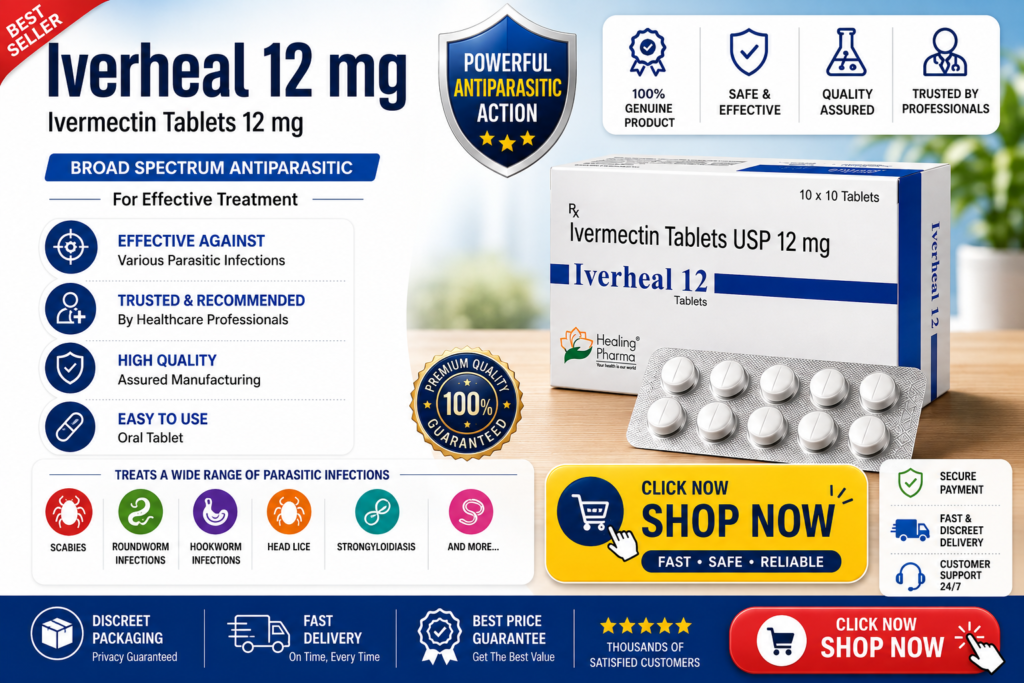
Iverheal 12 mg is a tablet containing ivermectin 12 mg, an antiparasitic medicine. It is used to treat certain parasitic infections affecting areas such as the intestines, skin, and eyes. The appropriate dose and treatment schedule depend on the specific infection and the patient’s body weight and medical condition.
Because ivermectin dosing is not the same for every condition, Iverheal 12 mg should be taken only according to a doctor’s prescription or the directions provided by a qualified healthcare professional.
What Is Iverheal 12 mg?
Iverheal 12 mg contains ivermectin, a medicine that works against certain parasites. It interferes with nerve and muscle activity in susceptible parasites, helping to paralyze and eliminate them.
Ivermectin tablets are prescribed for specific parasitic infections. For example, official prescribing information describes weight-based oral dosing for strongyloidiasis and onchocerciasis.
Iverheal 12 mg Uses
Doctors may prescribe ivermectin for certain parasitic infections, depending on the patient’s diagnosis.
Common medical uses can include treatment of:
- Certain intestinal parasitic infections
- Strongyloidiasis
- Onchocerciasis
- Certain other parasite-related conditions when specifically prescribed by a doctor
The exact indication and dosage should be confirmed with a healthcare professional because ivermectin is not appropriate for every type of infection.
Iverheal 12 mg How to Use
If your doctor has prescribed Iverheal 12 mg, follow the prescribed dose and schedule carefully.
1. Take it exactly as prescribed
Do not decide the dose yourself based only on the 12 mg strength printed on the tablet. Ivermectin doses are commonly calculated according to body weight and the infection being treated. Official labeling gives different weight-based regimens for different parasitic infections.
2. Take the tablet orally
Swallow the tablet with water unless your healthcare professional has given you different instructions.
3. Follow food instructions
For certain approved ivermectin tablet regimens, the prescribing information recommends taking the tablets on an empty stomach with water.
Follow the instructions supplied with your particular prescription.
4. Do not take extra tablets
Taking more ivermectin than prescribed does not necessarily make treatment work better and may increase the risk of adverse effects.
5. Complete the recommended treatment plan
Some parasitic infections may require follow-up testing to confirm that the infection has been eliminated. For strongyloidiasis, for example, official labeling recommends follow-up stool examinations to verify eradication.
Iverheal 12 mg Dosage
There is no single Iverheal 12 mg dosage that is suitable for everyone.
The recommended ivermectin dose depends on factors such as:
- Type of parasitic infection
- Body weight
- Age
- Medical history
- Other medicines being taken
- The doctor’s treatment plan
For example, official prescribing information recommends approximately 200 micrograms/kg for certain cases of strongyloidiasis and approximately 150 micrograms/kg for onchocerciasis.
Therefore, patients should not use a fixed “12 mg daily” schedule unless it has specifically been prescribed for them.
Can Iverheal 12 mg Be Taken Every Day?
Not necessarily.
The frequency of ivermectin treatment depends on the condition being treated. Some approved regimens use a single oral dose, while other medical conditions may require a different schedule.
For this reason, do not take Iverheal 12 mg every day unless your doctor has specifically instructed you to do so.
Iverheal 12 mg Side Effects
Some people may experience side effects after taking ivermectin.
Possible side effects can include:
- Nausea
- Diarrhea
- Dizziness
- Weakness
- Abdominal discomfort
- Headache
- Skin reactions
Side effects can also vary depending on the infection being treated and the body’s response to treatment.
Seek medical attention if you develop severe or unusual symptoms after taking ivermectin.
Iverheal 12 mg Precautions
Before taking Iverheal 12 mg, tell your doctor if you:
- Have liver problems
- Are pregnant or planning to become pregnant
- Are breastfeeding
- Have a history of drug allergies
- Are taking prescription or non-prescription medicines
- Have another medical condition
Your doctor can determine whether ivermectin is appropriate and select the correct dose.
Iverheal 12 mg Drug Interactions
Tell your healthcare professional about all medicines and supplements you currently use.
This is important because some medicines can affect how ivermectin works or may increase the likelihood of adverse effects.
Do not start another medicine at the same time without checking with your doctor or pharmacist.
What If You Miss a Dose?
What to do after a missed dose depends on the treatment schedule prescribed for your infection.
If you miss a dose, do not automatically take a double dose. Ask your doctor or pharmacist what you should do based on your prescribed regimen.
What If You Take Too Much Iverheal 12 mg?
Taking more ivermectin than prescribed can increase the risk of toxicity.
Possible overdose symptoms may include:
- Nausea or vomiting
- Dizziness
- Confusion
- Loss of coordination
- Weakness
- Low blood pressure
- Other serious neurological symptoms
If you suspect that you have taken too much Iverheal 12 mg, seek urgent medical advice.
Iverheal 12 mg and Pregnancy
If you are pregnant, planning pregnancy, or breastfeeding, speak with your healthcare professional before taking ivermectin.
Do not self-medicate with Iverheal 12 mg during pregnancy.
Can Iverheal 12 mg Be Used Without a Prescription?
Iverheal 12 mg contains ivermectin, and its appropriate dose depends on the medical condition and patient-specific factors. It should therefore be used under the direction of a qualified healthcare professional.
Self-treatment can result in an incorrect dose, inappropriate treatment, or delayed diagnosis of another condition.
Important: Iverheal 12 mg Is Not a General-Purpose Medicine
Ivermectin should only be used for conditions for which it has been appropriately prescribed.
It should not be taken simply because someone else used it successfully. The correct treatment depends on the diagnosis, body weight, medical history, and other factors.
Frequently Asked Questions
1. What is Iverheal 12 mg used for?
Iverheal 12 mg contains ivermectin and is used to treat certain parasitic infections. The exact use should be determined by a healthcare professional.
2. How should Iverheal 12 mg be taken?
Take Iverheal 12 mg exactly as prescribed. For certain ivermectin tablet regimens, the medicine is taken orally on an empty stomach with water.
3. Can I take Iverheal 12 mg daily?
Not unless your doctor has specifically prescribed a daily schedule. Ivermectin treatment frequency varies according to the condition being treated.
4. Is Iverheal 12 mg suitable for children?
Ivermectin dosing in children requires particular care and is generally based on body weight and the specific medical indication. Ask a pediatrician or other qualified healthcare professional before giving it to a child.
5. Can I take Iverheal 12 mg during pregnancy?
Do not take ivermectin during pregnancy without medical advice. Speak with your doctor before using it.
6. Should I take Iverheal 12 mg with food?
Official labeling for certain ivermectin tablet indications recommends taking the tablets on an empty stomach with water. Follow the instructions given with your prescription.
7. What happens if I miss my dose?
Do not double the next dose unless specifically instructed by your healthcare professional. Ask your doctor or pharmacist how to manage a missed dose.
Final Takeaway
Iverheal 12 mg is an ivermectin tablet used for certain parasitic infections. The correct dosage and frequency are not universal and may depend on body weight, the type of infection, and other individual factors.
For safe use, take Iverheal 12 mg exactly as prescribed, follow any food instructions provided by your healthcare professional, avoid self-medication, and seek medical advice if you experience significant side effects.
Medical Disclaimer: This article is intended for general educational purposes and does not replace professional medical advice, diagnosis, or treatment. Always consult a qualified doctor or pharmacist before starting, stopping, or changing ivermectin treatment.