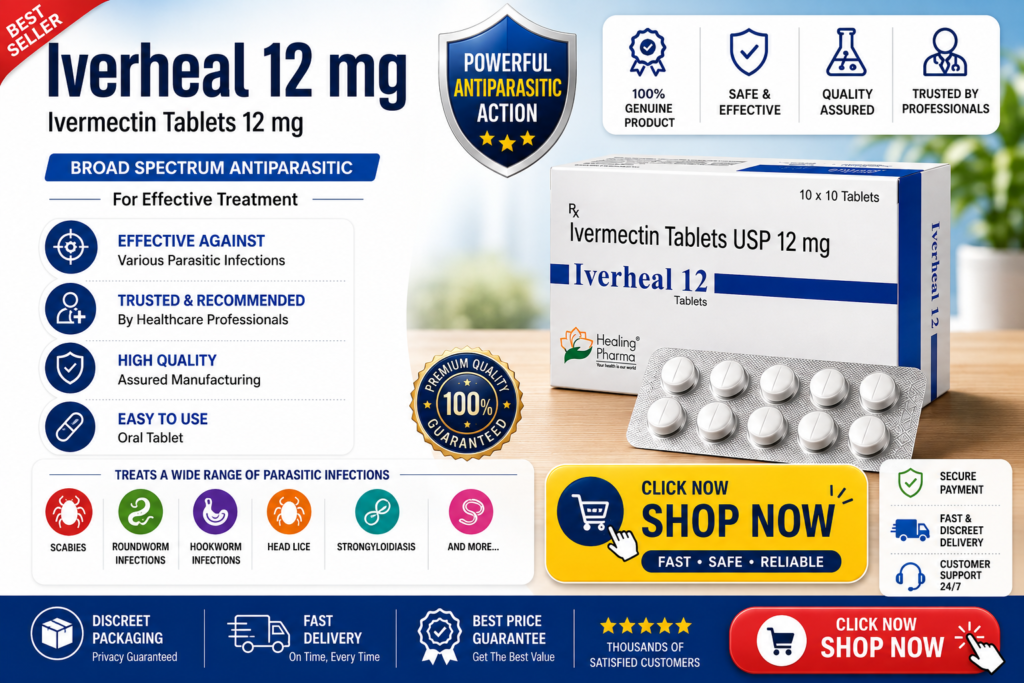
What Is Iverheal 12 mg? Uses, Benefits, Side Effects & Safety Guide
Iverheal 12 mg is an oral tablet containing ivermectin 12 mg, an antiparasitic medicine. It is used under medical supervision to treat certain parasitic infections. The exact use and dose depend on the type of infection, the patient’s body weight, age, medical history, and other medicines being taken.
Ivermectin belongs to a class of medicines called anthelmintics. It works against certain parasites by interfering with their nerve and muscle activity, helping the body eliminate the infection.
Iverheal 12 mg should not be taken simply because symptoms appear to match a parasitic infection. A healthcare professional should determine whether ivermectin is appropriate and what dose is required.
What Is the Active Ingredient in Iverheal 12 mg?
The active ingredient in Iverheal 12 mg is ivermectin 12 mg. Ivermectin is an antiparasitic medicine that has been used to treat specific infections caused by parasites.
The tablet strength of 12 mg does not mean that every person should take one 12 mg tablet. Ivermectin dosing can depend on the condition being treated and body weight, so the prescribed dose should always be followed.
What Is Iverheal 12 mg Used For?
Ivermectin tablets are used for certain parasitic infections. Depending on the country and clinical situation, ivermectin may also be used for some conditions outside its primary approved indications when prescribed by a healthcare professional.
FDA-approved oral ivermectin uses include treatment of intestinal strongyloidiasis and onchocerciasis, both caused by parasitic worms. Ivermectin is also used in some circumstances for conditions such as scabies or lice, although the appropriate formulation and treatment plan depend on the individual case.
Common medical uses may include:
- Certain intestinal parasitic worm infections
- Onchocerciasis, also known as river blindness
- Some other parasitic infections when specifically prescribed
- Certain cases of scabies or lice under medical guidance
The correct treatment depends on the diagnosis. Iverheal 12 mg should not be used for an infection unless a healthcare professional has recommended it.
How Does Iverheal 12 mg Work?
Iverheal 12 mg contains ivermectin, which acts on specific channels in the nervous and muscular systems of susceptible parasites.
This disrupts normal nerve and muscle function in the parasite, eventually causing paralysis and death of the parasite. The body can then eliminate the affected parasites.
The exact effect and treatment response can vary depending on the parasite and infection being treated.
Iverheal 12 mg Dosage
The appropriate ivermectin dose is not the same for everyone.
A healthcare professional may consider factors such as:
- Body weight
- Type of parasitic infection
- Severity of the infection
- Age
- Medical history
- Other medicines being taken
- Liver health and other relevant factors
Some ivermectin treatments involve a single dose, while certain infections may require additional treatment. For example, official patient information notes that treatment schedules can differ according to the infection.
Do not self-calculate an ivermectin dose or take Iverheal 12 mg repeatedly without medical advice.
How Should Iverheal 12 mg Be Taken?
Take Iverheal 12 mg exactly as prescribed by your doctor.
For some approved uses, oral ivermectin is taken as a single dose on an empty stomach with water. However, instructions can vary according to the condition being treated and the prescribing guidance applicable to the patient.
Important points:
- Follow the prescription carefully.
- Do not take more tablets than prescribed.
- Do not repeat a dose without medical advice.
- Tell your doctor about all medicines and supplements you take.
- Keep the medicine away from children.
- Use a legitimate human medicine product rather than veterinary ivermectin.
Iverheal 12 mg Side Effects
Like other medicines, ivermectin can cause side effects, although not everyone experiences them.
Possible side effects reported with oral ivermectin include:
- Nausea
- Vomiting
- Diarrhea
- Stomach pain or bloating
- Dizziness
- Weakness
- Reduced appetite
- Constipation
- Chest discomfort
- Trembling or shaking
These effects may vary depending on the condition being treated.
Serious Side Effects
Seek prompt medical attention if you experience symptoms such as:
- Severe skin rash
- Hives
- Blistering or peeling skin
- Significant confusion or extreme drowsiness
- Loss of consciousness
- Other unusual or severe symptoms
Serious reactions are uncommon, but they should not be ignored.
Iverheal 12 mg Precautions
Before taking Iverheal 12 mg, tell your healthcare professional about your medical history and all medicines you currently use.
Particular care may be necessary if you:
- Have a history of allergy to ivermectin
- Take prescription medicines or supplements
- Are pregnant or planning pregnancy
- Are breastfeeding
- Have significant liver or other health problems
- Have previously experienced a reaction to ivermectin
Ivermectin can interact with other medicines, so providing your doctor or pharmacist with a complete medication list is important.
Can Iverheal 12 mg Be Used During Pregnancy?
Do not take Iverheal 12 mg during pregnancy unless your healthcare professional specifically recommends it.
The decision to use ivermectin during pregnancy should be based on the potential benefits and risks for the individual patient. Speak with your doctor before using ivermectin if you are pregnant or may become pregnant.
Can Iverheal 12 mg Be Used While Breastfeeding?
If you are breastfeeding, consult a healthcare professional before taking Iverheal 12 mg.
Your doctor can consider the reason for treatment, the dose, and available safety information before recommending whether ivermectin is appropriate.
Is Iverheal 12 mg an Antibiotic?
No. Iverheal 12 mg is not an antibiotic.
It contains ivermectin, which is an antiparasitic medicine. Antibiotics are primarily used against bacterial infections, while ivermectin is used against certain parasites.
Using an antiparasitic medicine for a bacterial infection is not an appropriate substitute for antibiotic treatment.
Is Iverheal 12 mg an Antiviral Medicine?
Iverheal 12 mg should not be considered a general antiviral medicine.
Although ivermectin has been studied for various viral diseases, the FDA states that ivermectin is not approved or authorized for preventing or treating COVID-19.
Therefore, Iverheal 12 mg should only be used for an appropriate medical indication recommended by a healthcare professional.
Can Iverheal 12 mg Be Used for COVID-19?
Ivermectin is not FDA-approved or authorized for treating or preventing COVID-19. Taking larger-than-recommended amounts can be dangerous and may result in serious toxicity.
Do not use Iverheal 12 mg as a COVID-19 treatment unless your healthcare professional recommends it for another medically appropriate reason.
Drug Interactions
Ivermectin may interact with certain medicines. Therefore, tell your doctor or pharmacist about:
- Prescription medicines
- Over-the-counter medicines
- Vitamins
- Herbal products
- Dietary supplements
- Blood-thinning medicines
The FDA specifically notes that ivermectin can interact with some medicines, including blood thinners.
Never assume that a medicine is safe to combine with Iverheal 12 mg without checking with a qualified healthcare professional.
Iverheal 12 mg vs. Other Ivermectin Tablets
Iverheal 12 mg is one brand of ivermectin tablet containing 12 mg of the active ingredient.
Different ivermectin products can have different strengths and formulations. A 12 mg tablet should not automatically be substituted for another strength without professional advice.
The correct ivermectin product and dose depend on the patient’s diagnosis and treatment plan.
What Happens If You Take Too Much Iverheal 12 mg?
Taking more ivermectin than prescribed can increase the risk of serious adverse effects.
Possible symptoms of ivermectin overdose or toxicity can include:
- Nausea and vomiting
- Dizziness
- Low blood pressure
- Problems with balance or coordination
- Seizures
- Severe drowsiness
- Confusion
- Loss of consciousness
The FDA warns that large doses of ivermectin can be dangerous and potentially life-threatening.
If you think you have taken too much, seek urgent medical assistance rather than taking additional medicine to compensate.
Frequently Asked Questions About Iverheal 12 mg
1. What is Iverheal 12 mg?
Iverheal 12 mg is an oral ivermectin tablet containing 12 mg of ivermectin. It is an antiparasitic medicine used for certain parasitic infections under medical guidance.
2. What are the main Iverheal 12 mg uses?
Iverheal 12 mg may be prescribed for certain parasitic infections. Oral ivermectin is approved for conditions including intestinal strongyloidiasis and onchocerciasis in appropriate settings.
3. Is Iverheal 12 mg safe?
Ivermectin can be used safely when appropriately prescribed and taken according to medical instructions. Taking inappropriate doses or using it without medical supervision can increase the risk of adverse effects.
4. How often should I take Iverheal 12 mg?
The dosing schedule depends on the condition being treated and other individual factors. Do not establish your own dosing schedule; follow your healthcare professional’s instructions.
5. Can I take Iverheal 12 mg every day?
Do not take Iverheal 12 mg daily unless a qualified healthcare professional has specifically prescribed that schedule. Ivermectin dosing varies by medical condition.
6. Does Iverheal 12 mg treat scabies?
Ivermectin may be used in certain scabies treatment plans. However, whether oral ivermectin is appropriate depends on the individual patient and clinical circumstances. Consult a healthcare professional for diagnosis and treatment.
7. Does Iverheal 12 mg treat worms?
Ivermectin is used to treat certain parasitic worm infections, including intestinal strongyloidiasis and onchocerciasis. It is not effective against every type of worm infection.
8. Is Iverheal 12 mg an antibiotic?
No. Iverheal 12 mg contains ivermectin, an antiparasitic medicine, not an antibiotic.
9. Can I take Iverheal 12 mg without a prescription?
Whether ivermectin requires a prescription depends on the country and local regulations. Because the correct dose and indication are important, it should be used only with appropriate medical guidance.
10. Can I use veterinary ivermectin instead?
No. Veterinary ivermectin products are formulated and labeled for animals and should not be substituted for human medicines. The FDA warns people not to use animal ivermectin products.
Final Thoughts
Iverheal 12 mg contains ivermectin 12 mg, an antiparasitic medicine used to treat certain parasitic infections. Its appropriate dose and treatment duration depend on the specific infection and individual patient factors.
Although ivermectin can be an effective medicine for appropriate indications, it should not be self-prescribed or taken in higher or more frequent doses than recommended. Always use Iverheal 12 mg according to the instructions of a qualified healthcare professional.
Medical Disclaimer
This article is provided for general educational and informational purposes only. It is not a substitute for professional medical advice, diagnosis, or treatment. Always consult a qualified healthcare professional before starting, stopping, or changing any medication.